One of the top questions I get asked at my markets is “why are you so passionate about herbal bitters?”. Clearly, they are seeing my eyes light up when I go on and on about this product.
What the question should be however, is why are herbal bitters necessary for those who live in North America? And below I will answer that question.
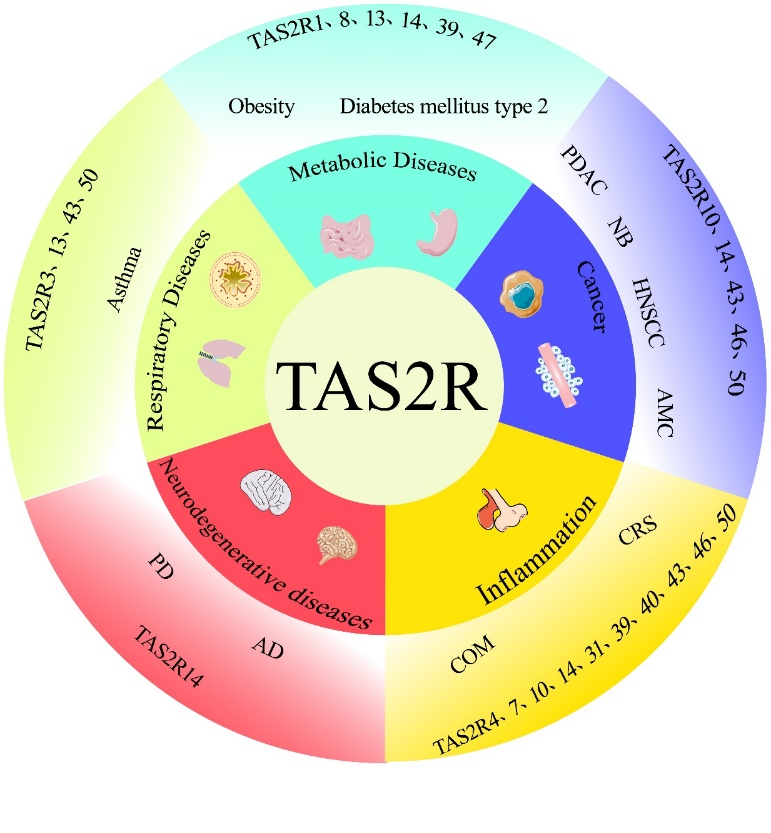
First, I need to get into what “bitters” actually are, and why they are so important. You see, we have about 25 bitter receptors (TAS2Rs (or T2Rs)) in our mouths that become active when we taste the flavour of “bitter”. Clearly, the bitter flavour is doing a lot for the body if our body has about 25 of these receptors — ready to communicate to our body. These bitter receptors communicate to our vagus nerve (you yoga lovers will know of the vagus nerve), which then communicates to our liver/gallbladder and digestive organs to start preparing and releasing bile or “digestive juices” which is necessary to break down our fats and digest fat soluble vitamins. Bile helps to neutralize acidic environments in our digestive system so that it can free up digestive enzymes to do their job to break down and digest our food.
Because the bitter receptors communicate to our vagus nerve, it also works on our nervous system at the same time. Our vagus nerve is our biggest cranial nerve pathway, which controls our internal organs by controlling our “rest and digest” (parasympathetic response). When we stimulate our vagus nerve (either with bitters or through sensory sensations or movements), it helps to promote good mental health, heart health, lung health, and immune system.
We should all be aware by now that our gut and brain are incredibly connected, and that when you treat the nervous system, you are treating the gut (and vice versa). Bitter flavours are a necessary component to our vagus nerve health, and therefore digestion.
Now here is where it gets interesting, what in the North American diet contains strong bitter flavours? Well, it used to be salad greens, until we started cultivating our lettuce to be less bitter. I suppose you could say coffee, but then the majority of coffee drinkers add some sort of sugar/sweetener and milk/cream to it (which takes away some of the bitter flavour). Maybe brussel sprouts or greens like kale?! Well them too, get loaded with butter and flavourings so that it doesn’t taste as bitter as it should. You see, we have conditioned ourselves in this continent (minus Mexico) to have an aversion to the bitter flavour. However, if you think back to the “good old times”, when it was always common to have a salad before a meal, why do you think that was? I always remember as a child being told “it wets the appetite”, but what does that even mean? What that meant, is that traditional salad greens (before we started using ultra sweet dressings), triggered our bitter receptors which stimulated our salivary glands. This created a moistening (“wetting”) effect in our mouths, which was actually our bitter receptors getting triggered and getting our bodies to prepare to eat.
Because we have been creating a food culture which disregards the bitter flavour profile, our health and digestion have been suffering. Now a days, about 31% to 42% of North American adults struggle with “fatty liver disease” and according to large scale medical surveys, about 50% to 65% of North American adults actively suffer from chronic digestive symptoms. It is interesting, that the more and more we move away from bitter foods/drinks, we move more towards digestive disorders.
Now what is interesting, is that in Italy (the place with arguably the most fattiest of foods and lots of alcohol), 25% of adults have fatty liver disease. What I find interesting, is that in Italy (and many other European countries), it is common to have something called an “apertif” before a meal. An aperitif is an alcoholic drink served before a meal to stimulate your appetite and prepare your stomach for food. The word comes from the Latin word aperire, which means “to open”—referring to “opening” the stomach for a meal. These beverages are “dry” and “bitter”, and have been recorded to be drank before meals and date back to 1786 in Turin, Italy. However, recorded use of bitter herbs used medicinally before a meal can date back over 2000 years.
Often, when travelling different countries in my 20’s, I have stumbled across very bitter foods once and while. During the time (when I didn’t understand the medicine behind that), I would spit it out, because I was someone who put 2 teaspoons of sugar in my coffee. It seems in many different cultures, they adhere to the bitter foods before meals tradition. It just seems that North America (again minus Mexico), the UK, and Australia are the odd ones out. And yet, we have some of the highest rates of fatty liver. Of course, there are other reasons behind that.. I mean North America is a very fast food driven culture, but, it does beg the question if our non activation of our bitter receptors could be part of our digestive disordered culture?
Perhaps this doesn’t attain to you, perhaps you have continued the tradition of bitter salad greens before meals. But if you haven’t, then this post is for you. I am always an advocate for doing it through your food first (like a bitter green salad), but if you are always on the run (another North American tendency), then choosing an “apertif” or using a “herbal bitters tincture” could be of benefit for you to consume before your bigger meals of the day.
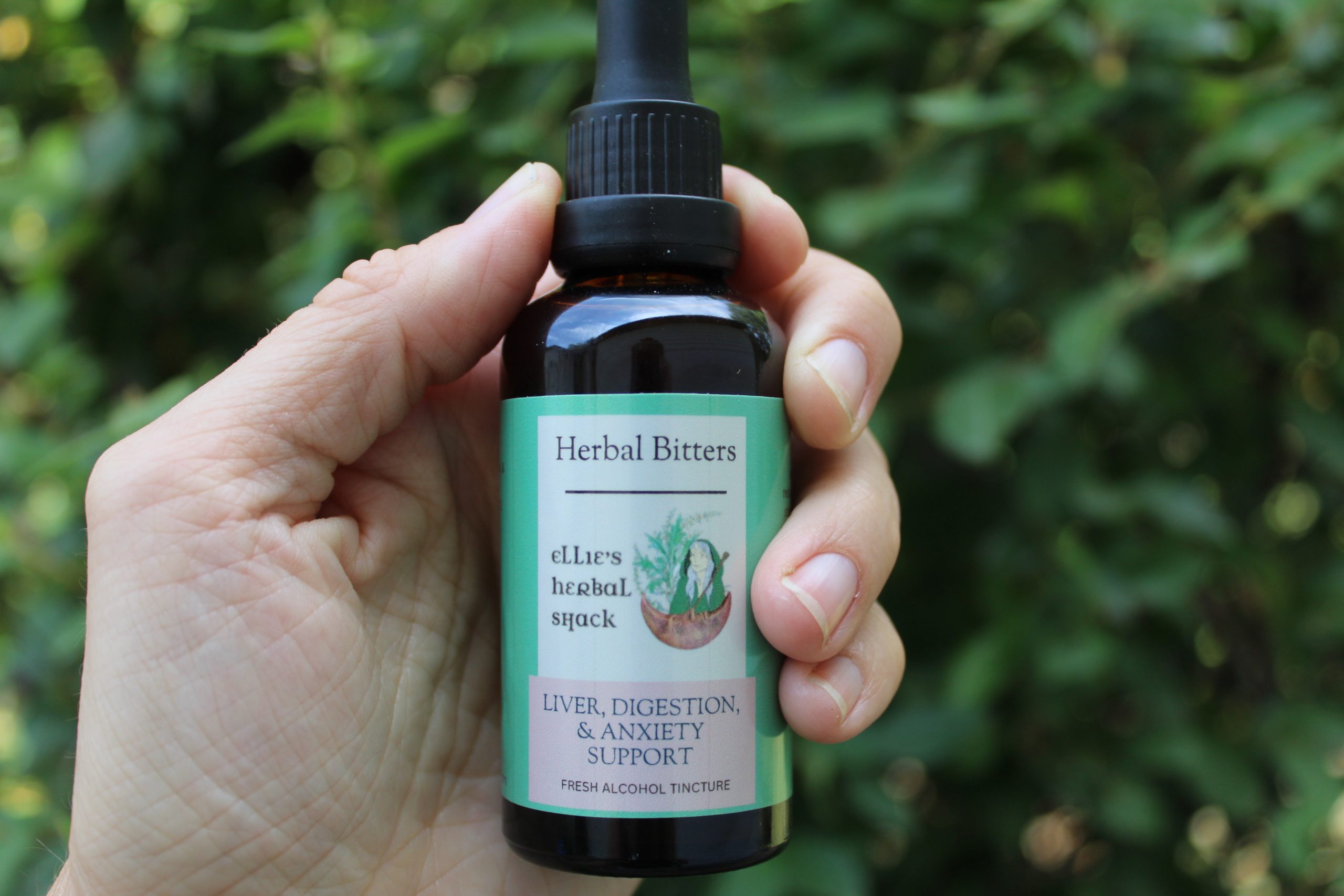
 This is why I created my herbal bitters tincture. And, this is why I become so passionate when I discuss it at markets. By keeping our bodies familiar with that flavour profile, and using it on the daily before meals, our bodies start to get the help and prep it needs for digesting our biggest meals of the day. By working with herbal bitters daily, you are activating your vagus nerve (helping your body move into a rest and digest state), taking pressure off your liver because it prepares enough bile to break down your food once you eat it, and supports your peristaltic movements to keep your bowels moving and happy.
My herbal bitters are made with “herbal nervine” herbs. Nervines are herbs that help to reduce nervous tension in the body (like anxiety and stress) which aids towards keeping the vagus nerve happy. They are also great menstruation herbs (emmenogogues), which help to promote a delated menstrual bleed AND reduce menstrual pain and bloating (when taken a few days leading up to your period). Made with mugwort, vervain, motherwort, ginger root, and orange peel, this is a unique blend that many herbalists do not put in their herbal bitters formula. It is like a 3 issues in 1 bottle type product, and I will continue to passionately talk about how amazing this formula is.
Sources:
https://www.nih.gov/news-events/nih-research-matters/detailed-structure-bitter-taste-receptor-revealed
https://pubmed.ncbi.nlm.nih.gov/36626630/
New survey finds forty percent of Americans’ daily lives are disrupted by digestive troubles